The Cultural Humility Curriculum is meant to:
- Establish shared purpose between clinics caring for those impacted by incarceration
- Provide a context for how incarceration and reentry intersect with healthcare access & utilization
- Aid staff in ability to meet needs of previously incarcerated patients
- Provide context of receiving health care within incarcerated settings
- Help clinic staff understand the difficulties of returning from prison/jail with health conditions
- Challenge assumptions and beliefs about incarcerated persons
- Raise intersecting cultural sensitivity issues such as race, class, gender, and ethnicity
Who Might Use This Curriculum?
This curriculum was written for anyone who interacts with patients who have a history of incarceration, with a specific focus on Transitions Clinic staff. This includes not just medical providers but the people at the appointment desk, clinic telephone operators, lab technicians, nurses, intake administrators, social workers, mental health providers and specialists who may see patients with incarceration history in their practice.
Each clinic is unique in its staff and the community it is serving. This curriculum was written assuming participants would include some or all of the following disciplines of staff: medical providers, nursing staff, social workers, mental health providers, administrative staff and community health workers. Each discipline has a different role in the clinic and the particular role may raise different issues to focus on in the curriculum.
Structure
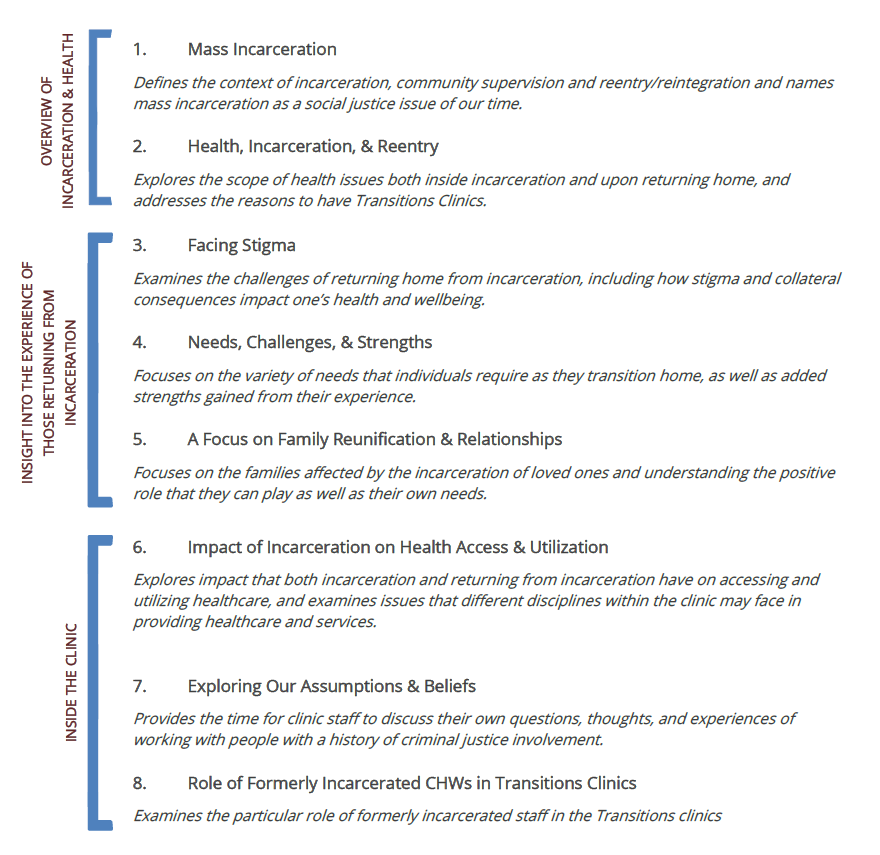
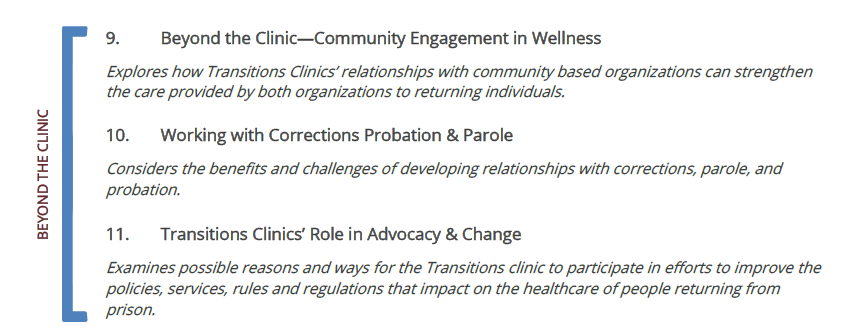
This curriculum is composed of 11 modules, structured around 3 themes: Overview of Incarceration & Health, Insight into the Experiences of those Returning from Incarceration, Inside the Clinic, and Beyond the Clinic. You can browse the modules or use these descriptions to identify which workshops meet the training needs at your clinic.
Adapting the Curriculum to Your Needs
For many busy clinics and health care providers, completing all 11 modules is unrealistic. We encourage you to utilize this curriculum in the way that best reflects the needs of your group. The sessions are designed for an hour and a half but could be utilized in different time spans. There are also resources listed at the end of each workshop for exploration beyond that hour and a half. You are also welcome to adapt lesson plans to more accurately reflect your community and the status of your group.
Possibilities for structuring cultural humility training at your clinic include:
- Holding regular trainings to cover all 11 modules, or only the relevant modules
- Creating a day-long training from a subset of modules relevant to your needs
- Using individual modules on an as-need basis
Module Map
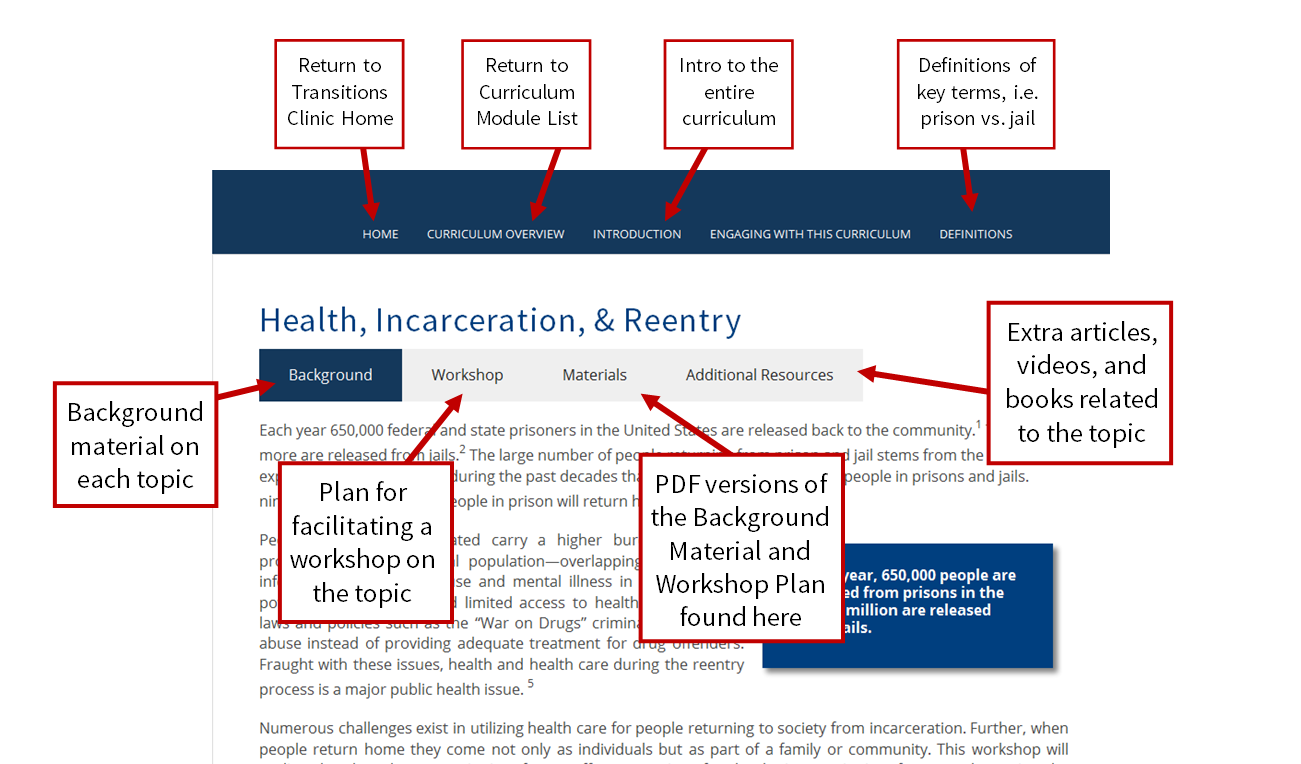
Within each module are four tabs: Background, Workshop Plan, Materials, and Additional Resources. The Workshop Plan was written to provide supplementary information on facilitating discussions, navigating difficulty, and structuring conversations. In the “Materials” tab, you’ll find downloadable, and printer-friendly, versions of the Background Material and Workshop Plan, for those who wish to facilitate off-line.